
Quantum for Good
June 7, 2026 • 8 min read
Girls in Quantum
Author
Author: Eda Sorani
Why the next big leap in computing should be measured also by purpose, not just speed.
When I first fell in love with quantum technology, I kept asking a question that doesn’t always come up in technical talks. Not just what can this technology do?, but who is it for?
For a long time it felt like these two conversations lived in separate rooms. In one room, people talked about quantum computers as a race: faster algorithms, cryptography, competitive advantage. In another room, people talked about the world’s biggest problems: the climate crisis, health, inequality. I always wanted to see those rooms connected, with social impact built into the technology from the very beginning rather than added on at the end. This article is my attempt to bring them into the same room. Quantum computing is one of the most powerful tools our generation will inherit, and I believe its real story isn’t only about speed. It’s about what we choose to point it at.
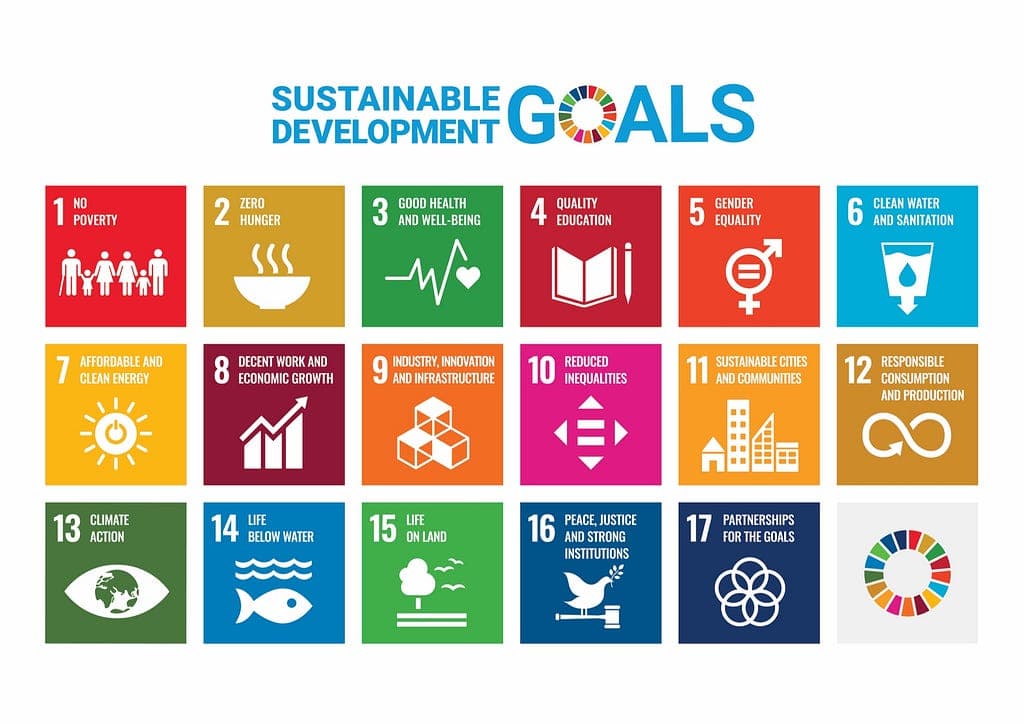
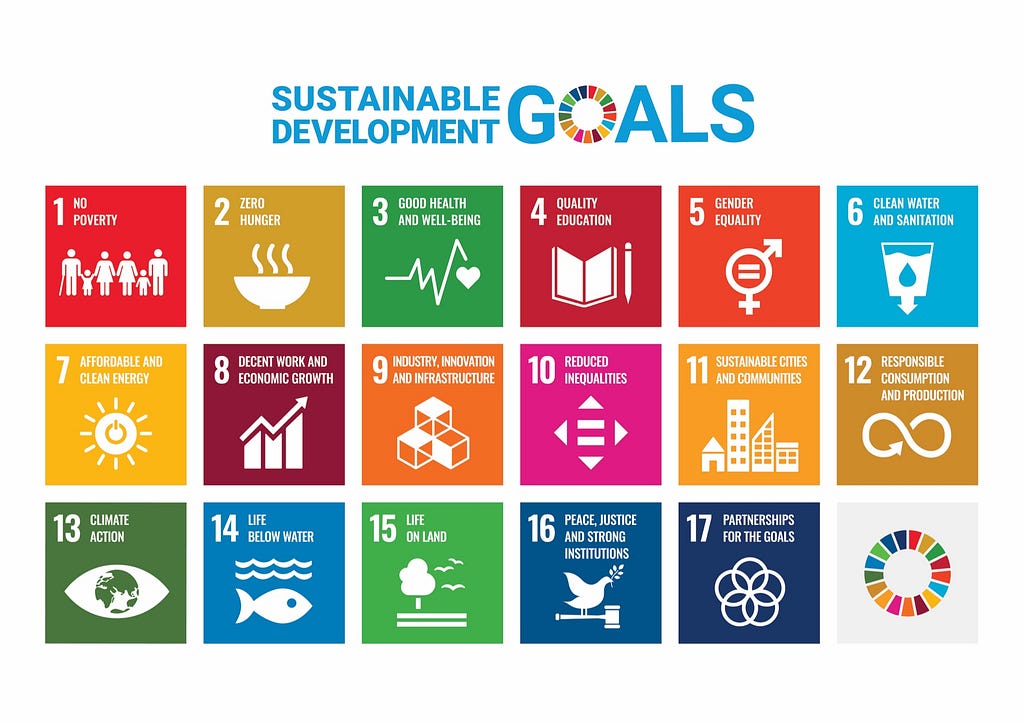
A helpful starting point is the United Nations Sustainable Development Goals, or SDGs: 17 global goals that all UN member states agreed on in 2015. They cover things like clean energy, good health, quality education, gender equality, and climate action — a shared to-do list for the planet. If we develop quantum technology responsibly, it can help with several of them. So let’s walk through where quantum and “doing good” actually meet.
Climate action and better materials
SDGs 13 (climate), 7 (clean energy), 9 (industry & innovation)
Climate change is, at its core, a problem of incredibly complex systems. Modeling the atmosphere, or designing a new material for a battery, means tracking how huge numbers of tiny particles behave all at once. Classical computers quickly run out of room to do this accurately.
Here’s the neat part: molecules and materials follow the rules of quantum mechanics — and so do quantum computers. In a sense, they speak the same language. That makes them naturally suited to simulating chemistry, an idea the physicist Richard Feynman pointed out back in 1982.
Why does that matter for the planet? Because better simulations could speed up real breakthroughs: longer-lasting batteries, cleaner ways to store energy, and new materials that can pull carbon dioxide out of the air. Each of those connects directly to clean energy, smarter industry, and climate action.
This isn’t just theory. The Open Quantum Institute (hosted by CERN) works on inclusive access to quantum computing for the benefit of humanity, and researchers are already exploring quantum methods for climate modeling, flood prediction, disaster resilience, and carbon-capture materials.
European companies — among them planqc, where I work — are exploring applications climate modeling. “Quantum for good” is slowly becoming a real field of experiments, not just a nice idea.
One honest caveat: we have to be transparent about the limits and the energy costs (more on that later). Quantum should support established climate science, not replace it.
Fairer risk modeling in finance
SDGs 8 (decent work & growth), 10 (reduced inequalities)
Banks and insurers constantly run “what if” simulations to estimate risk — what happens to a portfolio if markets crash, for example. A common method, called Monte Carlo simulation, basically rolls the dice thousands of times to map out possible outcomes. It works, but it’s slow and hungry for computing power.
Quantum algorithms may be able to estimate those probabilities with far fewer steps. Put simply: faster, more precise answers to questions like “how risky is this?” In principle, that could make the financial system more stable and less prone to nasty surprises.
But here’s the part I care about most: faster is not automatically fairer. A more powerful prediction tool could just as easily lock in bias — for example, by quietly making it harder for certain groups to get a loan. So responsible quantum finance has to come with ethical guardrails and ESG thinking (that’s environmental, social, and governance criteria — basically, judging a company by its impact on the planet and people, not only its profit). The goal should be long-term stability and fair access to capital, not just an edge for whoever has the fastest machine.
Health and discovering new medicines
SDG 3 (good health & well-being)
Medicines work because molecules fit together — a bit like a key turning in a lock. Figuring outwhich “key” will work means simulating how molecules bind and react, and those interactions are quantum by nature. Classical computers can only approximate them, which is slow and imperfect.
Quantum computing could model this molecular matchmaking much more accurately, potentially speeding up the discovery of new treatments. That’s a direct contribution to better health.
But a breakthrough only helps if people can actually get it. If quantum-accelerated research produces new therapies, we need global access frameworks so that low-income regions benefit too — not just the wealthiest. Progress in the lab has to be matched by fairness in who it reaches.
Education, diversity, and building the next generation
SDGs 4 (quality education), 5 (gender equality)
This is the part that’s closest to my heart, and to the whole reason, I love following Girls in
Quantum.
Quantum for good isn’t only about applications. It’s about people. Every time we open up quantum education to someone new — especially young women and others who’ve been underrepresented in science — we’re not just being fair. We’re making the field better. Diverse teams notice different things. They’re more likely to spot an unintended consequence, ask an uncomfortable question, or design a solution that works for more than one kind of person.
There are concrete ways to grow this:
- Scholarships and mentorship in quantum
- • Partnerships with universities in emerging economies
- • Free and open learning resources
- • Inclusive hiring
- The more we spread quantum knowledge across the globe, the less it gets concentrated in a few
- hands — and the more its benefits get shared.
- If you’re reading this and wondering whether quantum is “for you,” let me be clear: it is. The field
- is young enough that there’s room for your questions, your perspective, and your work.
We can’t do it alone
Building responsible quantum technology takes a whole ecosystem: universities, companies, international organizations, and science-diplomacy platforms all talking to each other. The Open Quantum Institute is one example — it describes itself as a multilateral effort to make quantum computing and its applications accessible and beneficial for humanity.
These collaborations matter because they show that ethics, sustainability, and the SDGs shouldn’t be an afterthought. They should be part of the design from day one. Quantum for good isn’t a marketing slogan. It’s a way of building.
The honest trade-off: energy
I don’t want to paint a picture too perfect. Some quantum computers have to be cooled to extreme temperatures, close to the coldest anything can get, and that takes a lot of energy.
So there’s a real paradox here: a technology that might help us fight climate change can also add to energy demand. Being responsible means facing that openly — measuring the full lifecycle, using renewable energy where we can, investing in efficiency, and reporting honestly instead of pretending the cost isn’t there.
From “what’s possible” to “what’s responsible”
The SDGs give us a kind of compass. Quantum computing is a powerful tool, but tools reflect the intentions of the people holding them.
To me, “quantum for good” means a few practical things: lining up research with sustainability priorities, measuring impact on society alongside technical milestones, building ethical review into projects, and being transparent about the environmental and social footprint.
You’ll often hear that the quantum revolution is inevitable. Maybe so — but its direction is not. That part is still up to us. If we consciously aim quantum innovation at the things that matter — a livable planet, a fairer economy, healthier lives — then the next leap in computing won’t just be faster. It’ll be worth something.
The future of quantum shouldn’t be defined only by speedups. It should be defined by purpose.
About the author
Eda Sorani is a Business Development Specialist at planqc, with a background in physics and business administration and currently pursuing a Doctor of Business Administration. She works on translating quantum technologies into real-world applications and supports education and communication in the field. She serves on the Advisory Board of Girls in Quantum.
Disclosure: I am working at planqc, which is mentioned in this article.
Want to dig deeper? References mentioned in the above text.
— Feynman, R. P. (1982). Simulating physics with computers. International Journal of Theoretical Physics.
— Cao, Y., et al. (2019). Quantum chemistry in the age of quantum computing. Chemical Reviews.
— Montanaro, A. (2015). Quantum speedup of Monte Carlo methods. Proceedings of the Royal Society A.
— Ho, K. T. M., et al. (2024). Quantum computing for climate resilience and sustainability challenges. arXiv preprint.
— Schwabe, M., et al. (2025). Opportunities and challenges of quantum computing for climate modelling. arXiv preprint.
— Barroca, M. A., Ferreira, R. N. B., & Steiner, M. (2024). Exploration of quantum computing in materials discovery for direct air capture applications. arXiv preprint.
— IPCC (2023). AR6 Synthesis Report: Climate Change 2023.
— United Nations (2015). Transforming our world: The 2030 Agenda for Sustainable Development.
— Open Quantum Institute (CERN). The Open Quantum Institute.
Enjoyed this read? Support the author onMedium.
Reactions
Responses (0)
Join the conversation
Enter your name to start commenting.
No comments yet. Be the first to share your thoughts!