
Bit x Qubit: What’s the difference?
February 15, 2026 • 2 min read
Girls in Quantum
Author
Author: Maria Helena, Brazilian Ambassador and Researcher at Itaú Bank (Icti)
Quantum computers are among the most promising technologies in computing and physics. Many researchers, engineers, and scientists have been working to understand how quantum computers function and how they may transform the way we process information. But the question is: what makes quantum computers so special?
The answer lies in the way quantum computers process information.
In traditional computers, information is processed using bits. A bit is the smallest unit of information and can exist in only two states: 0 or 1. It is analogous to a coin that we can flip to either heads or tails, but never both at the same time.
Now imagine a different scenario: the same coin, but instead of landing on heads or tails, it remains somewhere in between. Is this possible?
In classical physics, no. But in quantum computing, the answer is yes.
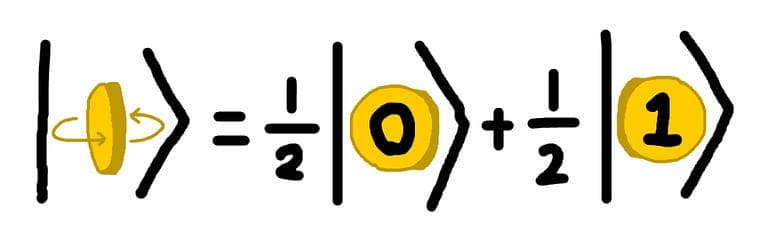
In quantum computers, information is stored in units called qubits. Unlike classical bits, qubits can exist in a state known as superposition. This means a qubit can be in the state 0, in the state 1, or in a combination of both states at the same time.
Returning to the coin analogy, a classical bit is like a coin lying flat on a table – it is either heads or tails. A qubit, however, is like a coin spinning in the air. While it is spinning, it is not just heads or just tails. Instead, it exists in a mixture of both possibilities simultaneously.
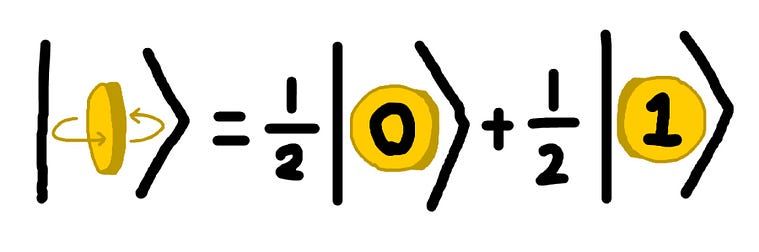
When we measure the qubit, it resolves into one definite state – either 0 or 1. But until that measurement happens, it can represent multiple possibilities at once.
This fundamental difference in how information is represented and processed is what gives quantum computers their extraordinary potential and makes them fundamentally different from classical computers.
Enjoyed this read? Support the author onMedium.
Reactions
Responses (0)
Join the conversation
Enter your name to start commenting.
No comments yet. Be the first to share your thoughts!